The move that makes this recipe foolproof is using condensed milk as the caramel base instead of melted sugar. No candy thermometer, no risk of crystallising, no standing over a pot of molten sugar praying it does not seize. Just steady low heat and a wooden spoon.
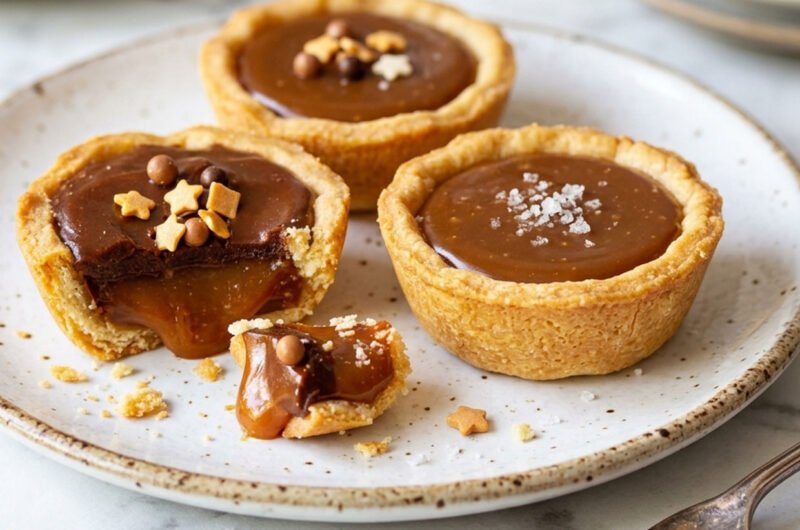
A buttery shortcrust shell filled with thick, glossy caramel and finished with sea salt flakes. Rich, indulgent, and the kind of dessert that makes everyone at the table go quiet.
Table of Contents
Why the condensed milk method matters
The first time I made caramel tarts I tried a proper sugar caramel from scratch. I burned it twice, then gave up and used condensed milk instead. It was smoother, more consistent, and honestly more delicious than anything I managed with a pot of melted sugar. I have never gone back.
- Condensed milk caramelises gently. Cooked slowly with butter and golden syrup, it thickens into a smooth, glossy caramel without the burning or crystallising risk of a traditional sugar caramel.
- Low heat, constant stirring, that is the whole technique. No thermometer, no special skill. Just patience for the 8 to 10 minutes it takes.
- Blind baking still matters. Even the most reliable caramel will turn a shell soggy if it goes in before the pastry is properly baked and cooled slightly.
Ingredients you will need
For the pastry shells
- 2 sheets store-bought shortcrust pastry, thawed
- Cooking spray or butter for greasing
For the caramel filling
- 395g tin sweetened condensed milk
- 60g butter
- 2 tablespoons golden syrup
- Sea salt flakes to finish
Makes 12 individual tarts using a standard 12-hole patty pan tin. According to BBC Good Food, the high sugar content of condensed milk allows it to caramelise gently and evenly when cooked with butter over low heat.
How to make caramel tarts step by step
- Preheat your oven to 190 degrees Celsius fan-forced. Grease a 12-hole patty pan tin well with butter or cooking spray.
- Allow the pastry sheets to thaw for 10 minutes until pliable. Cut circles slightly larger than the holes using a round cutter and press each one gently into the tin, bringing the pastry up the sides evenly.
- Line each shell with a small square of baking paper and fill with baking weights or dry rice. Blind bake for 10 minutes, then remove the weights and paper and bake for a further 5 minutes until the bases are lightly golden. Set aside to cool slightly.
- The caramel technique starts here. Combine the condensed milk, butter and golden syrup in a medium saucepan over low to medium heat. Stir constantly, do not walk away.
- Keep stirring and cooking for 8 to 10 minutes until the caramel thickens, turns a deep golden colour and begins to pull away from the sides of the pan slightly. Do not rush this or turn the heat up, it will burn quickly if you do.
- Remove from the heat and allow the caramel to cool for 2 minutes, stirring occasionally to release steam.
- Spoon the warm caramel into the blind-baked tart shells, filling each one almost to the top. Work quickly, it begins to set as it cools.
- Sprinkle each tart with a pinch of sea salt flakes. Leave to cool and set at room temperature for at least 1 hour, or refrigerate for 30 minutes for a faster set.
Caramel Tarts Recipe
Course: Dessert, SweetsCuisine: AustralianDifficulty: Easy4
servings30
minutes40
minutes300
kcal1
hour10
minutesButtery shortcrust pastry shells filled with a smooth, glossy condensed milk caramel and finished with sea salt flakes. An elegant and indulgent Australian dessert that looks far more impressive than the effort required.
Ingredients
- Pastry Shells
2 sheets store-bought shortcrust pastry, thawed
Cooking spray or butter for greasing
- Caramel Filling
395 g tin sweetened condensed milk
60 g butter
2 tablespoons golden syrup
Sea salt flakes to finish
Directions
- Preheat oven to 190 degrees Celsius fan-forced. Grease a 12-hole patty pan tin.
- Cut pastry circles and press into tin holes. Blind bake with weights for 10 minutes, remove weights and bake 5 more minutes until lightly golden.
- Combine condensed milk, butter and golden syrup in a saucepan over low to medium heat. Stir constantly.
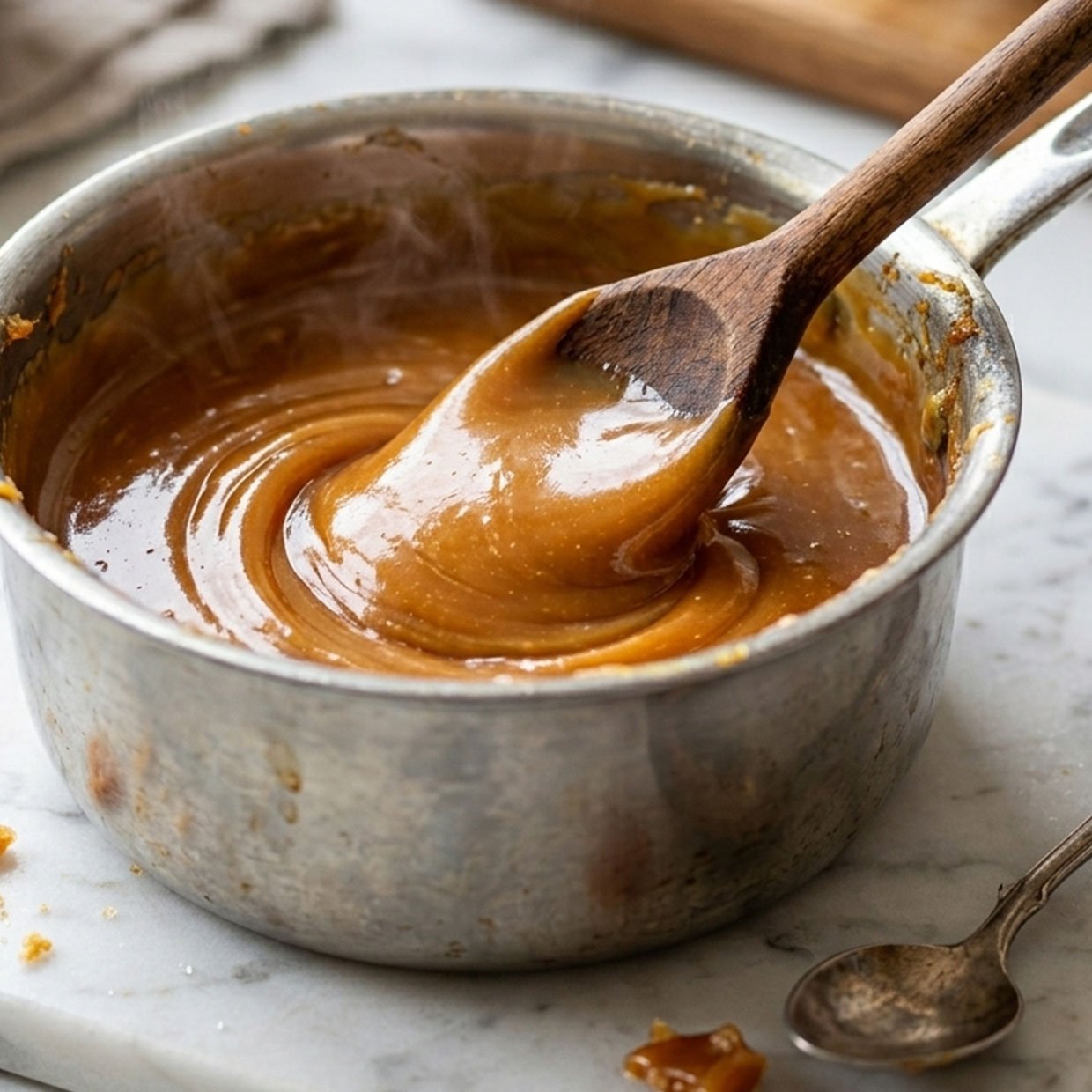
- Cook for 8 to 10 minutes until thick, deep golden and pulling from the sides. Remove from heat and cool 2 minutes.
- Spoon warm caramel into the tart shells and sprinkle with sea salt flakes.
- Cool at room temperature for 1 hour or refrigerate for 30 minutes until set.
Notes
- Stir constantly: Never walk away from the caramel while it is on the heat. It needs constant stirring to stay smooth and prevent burning.
- Low heat only: Keep the heat at low to medium throughout. High heat causes the caramel to burn and the butter to separate.
- Work quickly when filling: Caramel sets fast as it cools. Have all your tart shells ready before you take the caramel off the heat.
- Make ahead: The pastry shells and caramel can both be made a day ahead and assembled on the day for the freshest result in these caramel tarts.
What happens if the caramel goes wrong
- Grainy or separated: heat was too high, or it was not stirred enough. Low to medium heat and constant stirring throughout is non-negotiable, high heat separates the butter and makes it gritty.
- Soggy shells: either blind baking was skipped, or the warm caramel went into shells that were still hot. Let the shells cool slightly first.
- Not setting: it simply was not cooked long enough. It needs to reach a deep golden colour and pull away from the pan sides slightly, pale and runny means more time on the heat.
Variations to try
- Chocolate caramel tarts: once set, spoon a little melted dark chocolate over each tart and leave to set. A classic combination.
- Banana caramel tarts: a few thin banana slices in the shell before the warm caramel goes in. Softens in as it sets, adds fruity sweetness.
- Macadamia caramel tarts: press a whole roasted macadamia into the centre before it sets. A genuinely Australian twist with buttery crunch.
Make ahead and storage
Blind-baked shells keep in an airtight container at room temperature for up to 2 days. The caramel can be made up to 2 days ahead and stored in a jar in the fridge, gently reheat until pourable before filling. Assembled tarts keep in the fridge for up to 3 days, bring to room temperature for 15 minutes before serving.
Australian recipes you might like
Frequently asked questions
Can I use puff pastry instead of shortcrust?
Shortcrust is strongly recommended because it bakes into a firm, crispy shell that holds the caramel filling well. Puff pastry will puff up and create an uneven shell that is harder to fill neatly.
Can I make one large tart instead of individual ones?
Yes. Press the pastry into a 23cm loose-bottomed tart tin, blind bake for 15 minutes with weights then 8 minutes without, and fill with the full batch of caramel. Slice and serve at the table.
How long do caramel tarts last in the fridge?
Assembled tarts keep in an airtight container in the fridge for up to 3 days. The pastry will soften very slightly over time but the caramel stays smooth and delicious.
These are one of those desserts that always creates a moment at the table. Simple enough for a weeknight treat but impressive enough for a dinner party.
Happy cooking from my Newcastle kitchen.
Ella x