This pavlova recipe makes a crisp meringue shell with a soft, marshmallowy centre, topped with whipped cream and fresh fruit. It serves 8 to 10 and makes a big centrepiece for summer and Christmas.
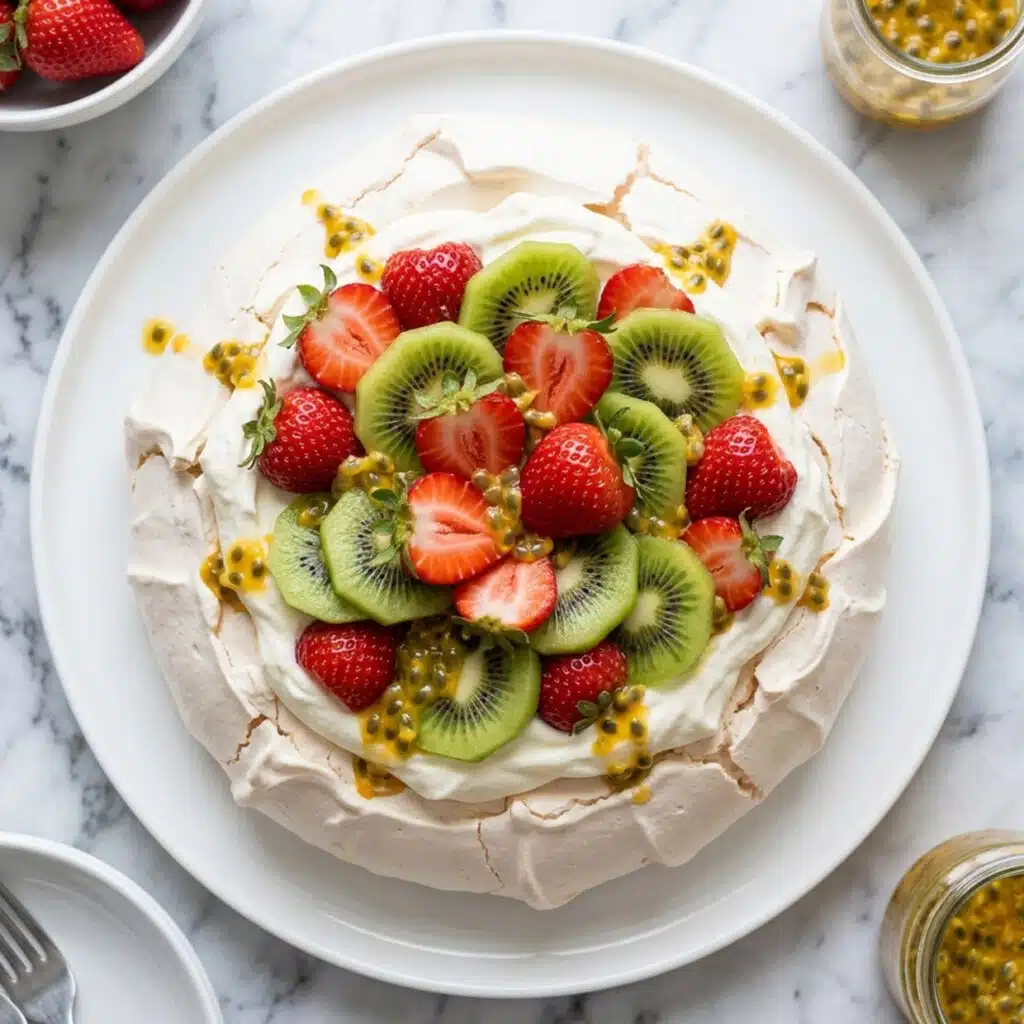
Pavlova has a name for going wrong, but almost every problem comes down to two things: cracking and weeping. Both are easy to avoid once you know the cause.
The short version is to dissolve the sugar fully, bake it low and slow, and leave it in the oven to cool with the door shut.
Table of Contents
Reading your meringue
The meringue tells you when it’s ready. Use these visual cues as you beat.
| Stage | What you see | Next step |
|---|---|---|
| Foamy | Bubbly and see-through | Keep beating on medium |
| Soft peaks | White and fluffy, peaks flop over | Start adding the sugar, one tablespoon at a time |
| Glossy | Thick, shiny and bright white | Keep going until all the sugar is in, about 8 minutes |
| Stiff peaks | Peaks stand straight up | Do the rub test |
| Rub test | Smooth between your fingers, no grit | Ready. Fold in the cornflour and vinegar by hand. |
Start with room temperature egg whites and a very clean, dry bowl. Even a trace of yolk or grease stops the whites whipping. Wiping the bowl with a little vinegar on paper towel helps.
What each ingredient does
A pavlova is different from a plain meringue because of its soft middle. That comes from two small additions.
- Caster sugar: fine grains dissolve quickly for a smooth, glossy meringue.
- White vinegar: the acid keeps the egg whites stable and the centre soft and chewy. Don’t swap it for lemon juice.
- Cornflour: works with the vinegar to give the marshmallowy centre and helps the shell hold its shape.
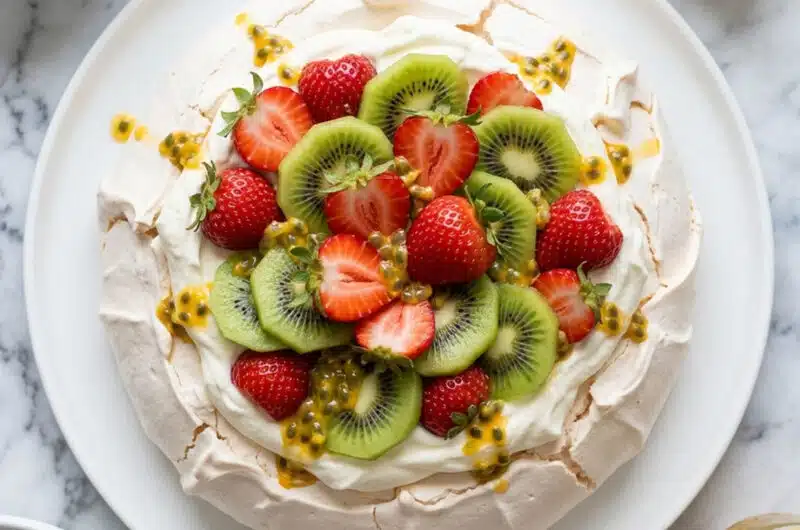
Classic Australian Pavlova Recipe
Course: DessertCuisine: AustralianDifficulty: Easy4
servings30
minutes40
minutes300
kcal1
hour10
minutesA crisp meringue shell with a soft, marshmallowy centre, topped with whipped cream and fresh fruit. Serves 8 to 10 and makes a big centrepiece dessert.
Ingredients
- Pavlova Base
6 large egg whites, at room temperature
300 g caster sugar
2 teaspoons white vinegar
2 teaspoons cornflour
1 teaspoon vanilla extract
- Topping
300 ml thickened cream
1 tablespoon icing sugar
1 teaspoon vanilla extract
Fresh fruit: strawberries, kiwifruit, passionfruit, mango or blueberries
Directions
- Preheat oven to 120 degrees Celsius fan-forced. Line a large baking tray with baking paper and draw a 22cm circle as a guide. Flip the paper over.
- Wipe your bowl and whisk with vinegar on a paper towel to remove any grease. Beat egg whites on medium speed until soft peaks form, about 2 to 3 minutes.
- With the mixer running, add caster sugar one tablespoon at a time over 8 minutes. Beat until thick, glossy and stiff peaks form. Rub a little between your fingers. It should feel smooth with no graininess.
- Add vanilla and beat 30 seconds more. Sift cornflour over the meringue, add vinegar, and fold in gently by hand with a metal spoon.
- Spoon meringue onto the prepared tray within the circle. Shape with slightly raised edges and a shallow indent in the centre. Reduce oven temperature to 100 degrees Celsius and bake for 1 hour 30 minutes.
- Turn oven off. Do not open the door. Leave pavlova to cool completely inside the oven for at least 2 hours or overnight.
- Whip cream with icing sugar and vanilla to soft peaks. Spoon over the cooled pavlova. Top with fresh fruit and serve immediately.
Notes
- Humid day tip: make the pavlova in the morning when the air is drier, and run the air conditioning if you can.
- Oven thermometer: many home ovens run hotter than the dial says. A cheap oven thermometer helps you keep it truly low.
- Make ahead: the bare base keeps in an airtight container at room temperature for up to 2 days. Add the cream and fruit just before serving.
- Egg yolks: use the leftover yolks for custard or lemon curd to serve with the pav.
Pavlova recipe troubleshooting
It cracked
- The oven was too hot. Keep it at 100°C and check it with an oven thermometer.
- The door was opened. Keep it shut during baking and cooling.
- It cooled too fast. Turn the oven off and leave the pavlova inside until completely cool.
A few small cracks are normal and get covered by cream anyway.
It wept syrup underneath
- The sugar wasn’t fully dissolved. Beat until the rub test feels completely smooth.
- It was a humid day. Bake early in the morning or with the air conditioning on.
- It was topped too early. Add the cream and fruit just before serving.
It went flat
The whites weren’t beaten to stiff peaks, or the meringue was shaped too low. It always settles a little as it cools, so build it up higher than you want it to end up.
Topping combinations
| Style | On top of the cream |
|---|---|
| Classic | Strawberries and passionfruit pulp |
| Christmas | Strawberries, kiwifruit and passionfruit for red, green and gold |
| Tropical | Mango, banana, passionfruit and blueberries |
| Lemon and berry | A thin layer of lemon curd, then mixed berries |
| Chocolate | Fold 1 tablespoon cocoa into the meringue, then top with raspberries |
For individual pavlovas, spoon rounds of meringue onto the tray and bake at 100°C for 45 to 55 minutes, then cool in the oven as normal.
Make ahead and storage
Bake the base up to 2 days ahead. Once completely cool, keep it in an airtight container at room temperature. Don’t put the bare base in the fridge, as the moisture softens the shell.
Whip the cream and cut the fruit on the day, and top the pav no more than 30 minutes before serving. Leftovers keep in the fridge for up to 2 days. The meringue softens, but it still tastes great.
The bare base can also be frozen, well wrapped, for up to 6 weeks. Thaw it at room temperature before topping.
Recipes you might like
Frequently asked questions
Why does my pavlova recipe crack?
The oven was too hot, the door was opened, or it cooled too quickly. Bake at 100°C and let it cool in the oven with the door shut.
Why is there liquid under my pavlova?
The sugar wasn’t fully dissolved, or it was a humid day. Beat until the meringue feels completely smooth between your fingers.
Can I make a pavlova recipe without a stand mixer?
Yes. A hand-held electric mixer works well, but allow an extra 2 to 3 minutes at each stage. Whisking by hand is very hard work.
How far ahead can I make pavlova?
The bare base keeps for up to 2 days in an airtight container at room temperature. Top it with cream and fruit just before serving.
What can I do with the leftover egg yolks?
Use them for vanilla custard, lemon curd, homemade pasta or hollandaise sauce.
This pavlova recipe is easier than its reputation. Dissolve the sugar, bake it low, leave the door shut, and you’ll have a crisp, marshmallowy pav ready for the table.
Enjoy,
Ella x