
This homemade hummus recipe is creamy, smooth and ready in under ten minutes. Once you make it yourself you will wonder why you ever bought it from the supermarket. The flavour is incomparably fresher and you can adjust the garlic, lemon and tahini to exactly how you like it.
I make a batch of this homemade hummus almost every week. It lives in the fridge ready for veggie sticks, crackers, wraps and lunchboxes and it disappears just as fast as I can make it.
In this post I will share the full method, the key ingredients that make the difference between a grainy dip and a silky smooth one, troubleshooting tips and a few flavour variations worth trying.
Table of Contents
Why this homemade hummus recipe works
Most people have made a batch of homemade hummus that turned out grainy or bland. A few small details in this recipe make all the difference.
- Ultra smooth texture. Blending the tahini and lemon juice first before adding the chickpeas is the trick that gives this homemade hummus its silky, restaurant-quality texture.
- Perfectly balanced flavour. The right amount of garlic, lemon and tahini means this hummus tastes fresh and bright without any single element overpowering the others.
- Ready in under 10 minutes. Everything goes into a food processor and blends in minutes. No cooking required.
- Works with pantry staples. Tinned chickpeas, tahini, lemon, garlic and olive oil. All things that live in most Australian kitchens already.
A little story from my kitchen
For years I made homemade hummus the obvious way, just throwing everything into the blender at once. It always tasted fine but the texture was never quite smooth enough. There was always a slightly gritty edge to it.
Then I read a tip about blending the tahini and lemon juice together first until they become fluffy and pale before anything else goes in. I tried it and the result was completely different. Silky, light and smooth all the way through.
That one change transformed my homemade hummus recipe and I have made it this way ever since. It is genuinely one of the simplest improvements you can make to a recipe you probably already know.
The key ingredients for this homemade hummus
Chickpeas
Tinned chickpeas are perfectly fine for this homemade hummus recipe and much faster than cooking dried ones. Drain and rinse them well. For an even smoother result, slip the skins off each chickpea before blending. It takes a few minutes but the texture improvement is noticeable.
Tahini
Good quality tahini makes a huge difference to homemade hummus. Look for a smooth, pourable tahini rather than a thick, stiff one. Stir it well before measuring as the oil tends to separate in the jar. According to Serious Eats, blending the tahini with lemon juice first creates an emulsion that gives hummus a lighter, creamier texture than any other method.
Ice cold water
Adding a tablespoon or two of ice cold water while blending is the secret to a lighter, fluffier homemade hummus. The cold water helps the mixture emulsify and creates an airier texture than room temperature water does.
Fresh lemon juice
Always use freshly squeezed lemon juice, not the bottled kind. The brightness and acidity of fresh lemon is essential to a well-balanced homemade hummus that does not taste flat.
Ingredients you will need
- 2 x 400g tins chickpeas, drained and rinsed
- 1/3 cup tahini, well stirred
- 3 tablespoons fresh lemon juice (about 1 large lemon)
- 1 clove garlic, crushed
- 2 tablespoons extra virgin olive oil, plus extra to serve
- 1/2 teaspoon ground cumin
- Salt to taste
- 2 to 3 tablespoons ice cold water
This homemade hummus recipe makes about 2 cups, enough for a generous sharing platter or a week of lunchbox snacks.
How to make homemade hummus step by step
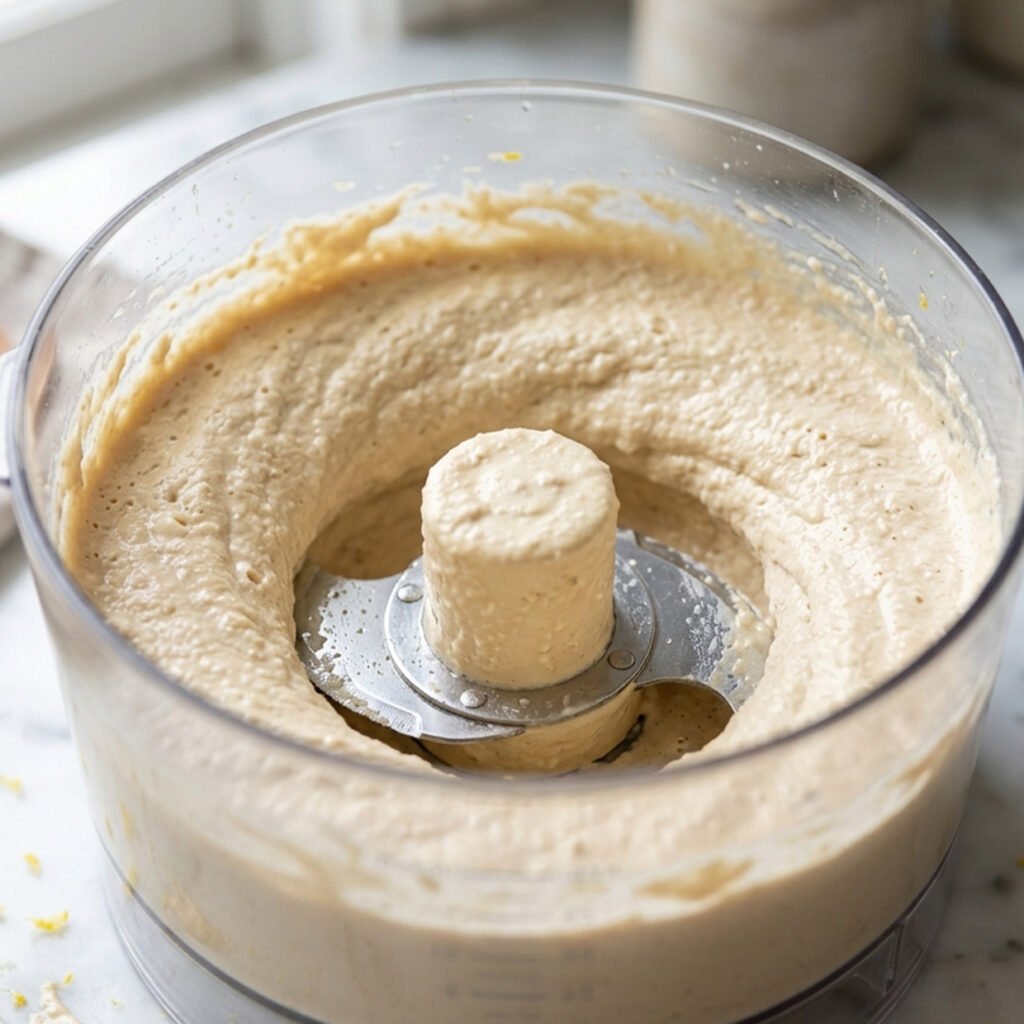
- Add the tahini and fresh lemon juice to a food processor. Blend for about 1 minute until the mixture becomes pale, thick and almost fluffy. Scrape down the sides and blend for another 30 seconds.
- Add the crushed garlic, olive oil, ground cumin and a good pinch of salt. Blend for another 30 seconds until well combined.
- Add the drained chickpeas. Blend for 1 minute, then scrape down the sides and blend for another minute. The mixture will look quite thick at this stage.
- With the processor running, add the ice cold water one tablespoon at a time until the homemade hummus reaches your preferred consistency. Creamy and smooth but still thick enough to hold its shape on a plate.
- Taste and adjust the seasoning, adding more lemon juice, salt or garlic as needed.
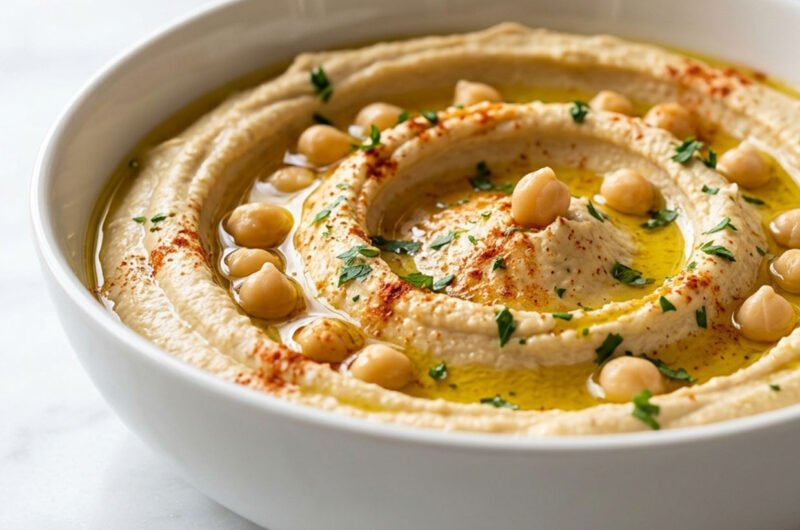
- Spoon into a bowl, drizzle generously with extra virgin olive oil, and finish with a sprinkle of paprika, a few whole chickpeas and a scatter of chopped parsley if you like.
Homemade hummus troubleshooting
Here are the most common issues with this homemade hummus recipe and exactly how to fix them.
Hummus is grainy or gritty
- Not blended long enough. Keep blending well past the point where it looks smooth. Homemade hummus needs at least 3 to 4 minutes of total blending time for a truly silky texture.
- Chickpea skins still on. Slip the skins off the chickpeas before blending for the smoothest possible homemade hummus.
Hummus tastes bland
- Not enough salt or lemon. Season generously and taste as you go. A flat homemade hummus almost always just needs more salt and a squeeze more lemon juice.
- Bottled lemon juice used. Always use fresh lemon juice for the brightest flavour in this recipe.
Hummus is too thick
- Add more cold water. Keep the processor running and add cold water one tablespoon at a time until the homemade hummus loosens to the consistency you want.
Homemade Hummus
Course: Snack, DipCuisine: AustralianDifficulty: Easy2
cups10
minutes95
kcal10
minutesA silky smooth homemade hummus recipe made with tinned chickpeas, tahini, fresh lemon and garlic. Ready in under 10 minutes and far better than anything from a supermarket tub.
Ingredients
2 x 400g tins chickpeas, drained and rinsed
1/3 cup tahini, well stirred
3 tablespoons fresh lemon juice
1 clove garlic, crushed
2 tablespoons extra virgin olive oil, plus extra to serve
1/2 teaspoon ground cumin
Salt to taste
2 to 3 tablespoons ice cold water
Directions
- Blend tahini and lemon juice for 1 minute until pale and fluffy. Scrape down and blend 30 seconds more.
- Add garlic, olive oil, cumin and salt. Blend 30 seconds.
- Add chickpeas and blend for 2 minutes, scraping down halfway.
- With processor running, add cold water one tablespoon at a time until smooth and creamy.
- Taste and adjust salt and lemon. Spoon into a bowl and top with olive oil, paprika and parsley.
Notes
- Blend tahini first: This is the single most important step for silky smooth homemade hummus. Do not skip it.
- Remove chickpea skins: Slip the skins off the chickpeas before blending for the absolute smoothest texture.
- Use cold water: Ice cold water helps create a lighter, fluffier homemade hummus than room temperature water.
- Season generously: Hummus needs more salt and lemon than you think. Taste and adjust until it sings.
Flavour variations to try
Once you have the base homemade hummus recipe down, these variations are easy and delicious.
Roasted garlic hummus
Swap the raw garlic for a whole head of roasted garlic. The flavour becomes mellow, sweet and deeply savoury. Squeeze the roasted cloves straight into the food processor with the tahini.
Roasted red capsicum hummus
Add one roasted red capsicum to the food processor with the chickpeas. It gives the homemade hummus a beautiful orange colour and a sweet, smoky flavour that works brilliantly on a platter.
Beetroot hummus
Blend in one small roasted beetroot for a stunning deep pink hummus with a slightly earthy sweetness. It looks spectacular on a white platter with a drizzle of olive oil over the top.
Make ahead and storage
This homemade hummus recipe is one of the best things to have ready in your fridge at all times.
Fridge
Store in an airtight container in the fridge for up to 5 days. Press a piece of plastic wrap directly onto the surface of the hummus before sealing to prevent a skin forming on top.
Freezer
This homemade hummus freezes well for up to 3 months. Portion into small containers and thaw overnight in the fridge. Stir well and add a little extra olive oil and lemon juice after thawing to refresh the flavour.
Serving tip
Take the hummus out of the fridge 15 minutes before serving. Room temperature homemade hummus has a better flavour and texture than cold hummus straight from the fridge.
Australian recipes you might like
Frequently asked questions
What is the secret to smooth homemade hummus?
The two biggest secrets are blending the tahini and lemon juice together first before adding the chickpeas, and blending for much longer than you think is necessary. At least 3 to 4 minutes of total blending time is what gives homemade hummus its silky texture.
Can I make homemade hummus without tahini?
Yes, though the flavour will be quite different. Replace the tahini with the same amount of natural peanut butter or sunflower seed butter for a nut-based alternative. The texture will still be smooth but the taste will be less traditional.
How long does homemade hummus last in the fridge?
Stored in an airtight container with plastic wrap pressed onto the surface, this homemade hummus keeps well in the fridge for up to 5 days. It also freezes well for up to 3 months.
Can I use dried chickpeas instead of tinned for homemade hummus?
Yes. Soak 200g dried chickpeas overnight, then cook until very soft, about 1 to 1.5 hours. Soft, well-cooked chickpeas blend more smoothly than tinned ones, so this method gives an even creamier result if you have the time.
Why does my homemade hummus taste bitter?
Bitterness in homemade hummus usually comes from too much raw garlic or low quality tahini. Use just one clove of garlic to start and taste before adding more. Always use a good quality, smooth tahini for the best flavour.
This homemade hummus recipe is one of those things that once you make it yourself, you cannot go back to the tub from the supermarket. It is faster, fresher and so much better in every way.
Happy cooking from my Newcastle kitchen.
Ella x