Pavlova has a reputation for one very specific reason: it goes wrong. A crack down the middle, a puddle of liquid under the shell, a centre that never turns marshmallowy at all. If that has happened to you, you are in very good company.
My first pavlova collapsed like a deflated balloon because I opened the oven door too early. My second wept all over the tray. It took a phone call to my mum, and her mum’s method passed down before that, before I understood what actually goes wrong and why.
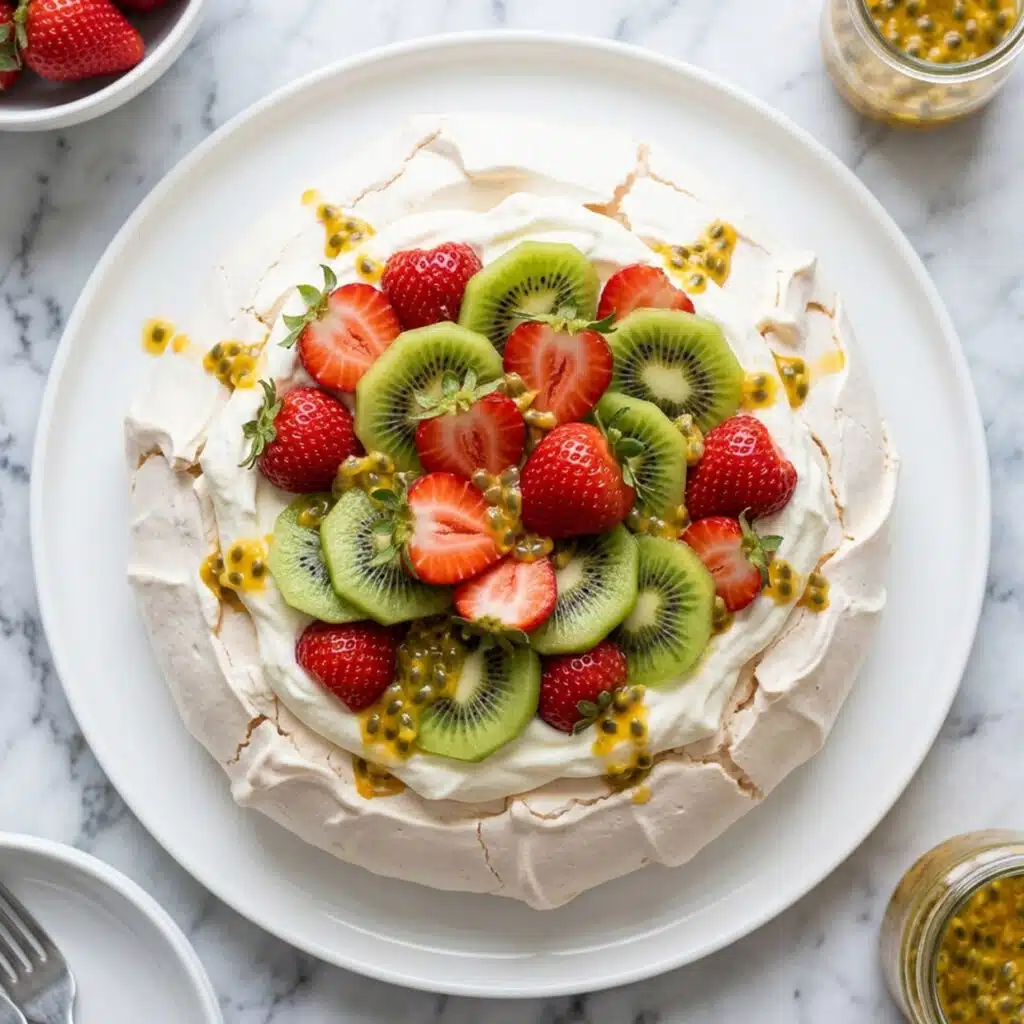
This is that method. It fixes the two mistakes that cause almost every failed pavlova recipe, and once you know what they are, this becomes one of the most reliable desserts in your rotation.
Table of Contents
Before you start: the two mistakes that ruin most pavlovas
Almost every failed pavlova recipe attempt comes down to one of two things: cracking, or weeping, that pool of sticky liquid under the shell. Both are completely avoidable once you understand why they happen.
- Cracking almost always means the oven ran too hot, the door was opened during baking or cooling, or the pavlova cooled too quickly. Low and slow, with no peeking, fixes it.
- Weeping almost always means the sugar was not fully dissolved into the meringue, or it was made on a very humid day. Beat until it feels completely smooth between your fingers, never gritty.
Keep both of those in mind as you go and you will land a proper result on the first try. The full breakdown of both problems, with more detail on each, is further down this post.
The key ingredients for this pavlova recipe
Egg whites
Room temperature egg whites whip up faster and to a greater volume than cold ones. Separate your eggs straight from the fridge but let the whites sit on the bench for 20 to 30 minutes before you start.
Any yolk in the whites will prevent them from whipping properly, even a tiny amount. Use a very clean, dry bowl every time.
Caster sugar
Caster sugar dissolves faster than regular white sugar, which is important for a smooth, glossy meringue. Add it slowly, one tablespoon at a time, while the mixer is running.
Rushing this step is one of the most common causes of the weeping problem covered later in this post. Take your time here.
White vinegar
This is the secret to the marshmallowy centre. The acid stabilises the egg white proteins and keeps the inside soft and chewy.
Do not skip it and do not substitute with lemon juice. The flavour profile is different and the result is not the same. According to Serious Eats, the acid in vinegar is what makes the difference between a crisp-all-through meringue and a true pavlova with a soft centre.
Cornflour
Works alongside the vinegar to give the pavlova that signature soft, slightly sticky centre. It also helps the shell keep its structure without cracking.
Just a small amount makes a big difference to the final texture of your pavlova recipe.
Ingredients you will need
For the pavlova base
- 6 large egg whites, at room temperature
- 300g caster sugar
- 2 teaspoons white vinegar
- 2 teaspoons cornflour
- 1 teaspoon vanilla extract
For the topping
- 300ml thickened cream
- 1 tablespoon icing sugar
- 1 teaspoon vanilla extract
- Fresh fruit to top: strawberries, kiwifruit, passionfruit, mango, blueberries
This pavlova recipe serves 8 to 10 people. It is a proper centrepiece dessert made for sharing.
How to make this pavlova recipe step by step
- Preheat your oven to 120 degrees Celsius fan-forced. Line a large baking tray with baking paper. Draw a 22cm circle on the paper as a guide, then flip it over so the pencil mark is on the underside.
- Make sure your mixing bowl and whisk attachment are completely clean and dry. Even a trace of grease will stop the egg whites from whipping. Wipe them down with a paper towel dipped in white vinegar to be sure.
- Beat the egg whites on medium speed until soft peaks form, about 2 to 3 minutes. The whites should look white and fluffy and hold a soft shape when you pull the whisk away.
- With the mixer still running, add the caster sugar one tablespoon at a time. This should take about 8 minutes. The meringue will become thick, glossy and very white. It is ready when it holds stiff, shiny peaks and you can rub a little between your fingers without feeling any graininess.
- Add the vanilla extract and beat for another 30 seconds. Sift the cornflour over the meringue, add the white vinegar, and fold both in gently with a large metal spoon. Do not use the mixer for this step. Fold by hand to keep as much air as possible.
- Spoon the meringue onto the prepared tray within the circle guide. Shape it into a round with slightly raised edges and a shallow indentation in the centre. This is where the cream and fruit will sit.
- Place the tray in the oven and immediately reduce the temperature to 100 degrees Celsius. Bake for 1 hour 30 minutes. The pavlova should feel dry to a gentle touch and lift cleanly off the paper.
- Turn the oven off. Do not open the door. Leave the pavlova inside to cool completely, at least 2 hours or overnight. This slow cooling is what prevents cracking in your pavlova recipe.
- When ready to serve, whip the cream with icing sugar and vanilla to soft peaks. Spoon over the top of the pavlova and pile on your fruit. Serve immediately once topped.
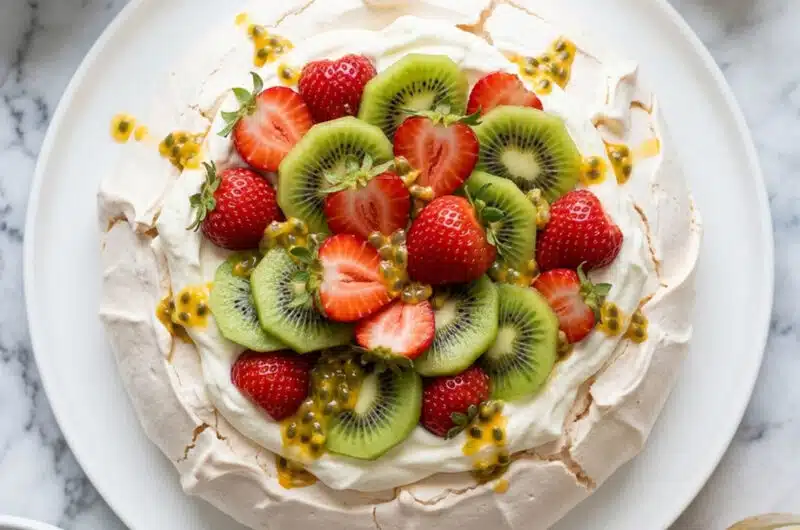
Classic Australian Pavlova Recipe
Course: DessertCuisine: AustralianDifficulty: Easy4
servings30
minutes40
minutes300
kcal1
hour10
minutesA classic Australian pavlova recipe with a crispy meringue shell and soft, marshmallowy centre. Topped with whipped cream and fresh seasonal fruit. Serves 8 to 10 and looks spectacular on the table.
Ingredients
- Pavlova Base
6 large egg whites, at room temperature
300 g caster sugar
2 teaspoons white vinegar
2 teaspoons cornflour
1 teaspoon vanilla extract
- Topping
300 ml thickened cream
1 tablespoon icing sugar
1 teaspoon vanilla extract
Fresh fruit: strawberries, kiwifruit, passionfruit, mango or blueberries
Directions
- Preheat oven to 120 degrees Celsius fan-forced. Line a large baking tray with baking paper and draw a 22cm circle as a guide. Flip the paper over.
- Wipe your bowl and whisk with vinegar on a paper towel to remove any grease. Beat egg whites on medium speed until soft peaks form, about 2 to 3 minutes.
- With the mixer running, add caster sugar one tablespoon at a time over 8 minutes. Beat until thick, glossy and stiff peaks form. Rub a little between your fingers. It should feel smooth with no graininess.
- Add vanilla and beat 30 seconds more. Sift cornflour over the meringue, add vinegar, and fold in gently by hand with a metal spoon.
- Spoon meringue onto the prepared tray within the circle. Shape with slightly raised edges and a shallow indent in the centre. Reduce oven temperature to 100 degrees Celsius and bake for 1 hour 30 minutes.
- Turn oven off. Do not open the door. Leave pavlova to cool completely inside the oven for at least 2 hours or overnight.
- Whip cream with icing sugar and vanilla to soft peaks. Spoon over the cooled pavlova. Top with fresh fruit and serve immediately.
Notes
- Humid day tip: Make the pavlova recipe in the morning when humidity is lower. Run the air conditioning if you can.
- Oven thermometer: Many home ovens run 10 to 20 degrees hotter than the dial says. An oven thermometer is cheap and makes a real difference.
- Make ahead: The bare pavlova base keeps in an airtight container at room temperature for up to 2 days. Only add the cream and fruit right before serving.
- Egg yolks: Do not waste the yolks. Use them for a batch of homemade custard or a lemon curd to drizzle over the pav instead of passionfruit.
Cracking and weeping, in detail
Here is the fuller breakdown of the two problems flagged at the top of this post, so you can diagnose exactly what happened if either one catches you out.
Cracking
- Oven too hot. The pavlova expanded too quickly and then contracted. Stick to 100 degrees Celsius and use an oven thermometer if your oven runs hot.
- Opened the oven door. The sudden temperature change causes the meringue to crack. Do not open the oven at all during baking or cooling.
- Cooled too quickly. Always cool in the oven with the door closed and the heat off.
Weeping (liquid pooling underneath)
- Sugar not fully dissolved. If you feel grit when you rub the meringue between your fingers, keep beating. Undissolved sugar draws moisture out during baking.
- Humid weather. Meringue absorbs moisture from the air. On a very humid day, make your pavlova recipe early in the morning when humidity is lower, or run your air conditioning while you bake.
- Topped too early. The cream and fruit release moisture. Only top the pav right before serving.
Pavlova recipe topping ideas
The classic Australian pavlova recipe topping is whipped cream, passionfruit pulp and sliced strawberries. It is classic for a reason. But there is plenty of room to play depending on the season.
Classic Aussie Christmas pavlova
Whipped cream, fresh strawberries, sliced kiwifruit, and a generous pour of passionfruit pulp. The colours are red, green and gold. Perfect for a summer Christmas table.
Tropical summer
Diced mango, sliced banana, passionfruit and a handful of blueberries. This pavlova recipe variation looks incredible and tastes even better on a hot day.
Lemon curd and berries
Spread a thin layer of store-bought lemon curd over the cream before adding mixed berries. The tartness cuts through the sweetness of the meringue beautifully.
Chocolate and raspberry
Fold a tablespoon of good cocoa into the meringue at the end to make a chocolate pavlova base. Top with cream and fresh raspberries. Very impressive for a dinner party.
Keeping it fresh
This pavlova recipe is one of the best make-ahead desserts in an Australian home cook’s repertoire. Here is how to plan it.
The base
The bare meringue base can be made up to 2 days ahead. Once fully cooled, store it in an airtight container or under a large dome at room temperature.
Do not put it in the fridge as the moisture will soften the shell and ruin the texture of your pavlova recipe.
The topping
Whip the cream and prepare the fruit on the day. Add them to the pavlova no more than 30 minutes before serving.
The moisture from the cream will start to soften the shell if it sits too long before serving.
Leftovers
Once topped, leftover pavlova keeps in the fridge for up to 2 days. The meringue will soften but it still tastes wonderful.
Some people actually prefer the next-day version when everything has melded together. Serve it straight from the fridge.
Australian recipes you might like
Frequently asked questions
Why does my pavlova recipe go flat after baking?
The most likely cause is that the egg whites were not beaten to stiff enough peaks before the sugar was added, or the meringue was not shaped tall enough on the tray. The pavlova will always settle slightly as it cools, so always build it up a little higher than you want the final result to be.
Can I make a pavlova recipe without a stand mixer?
Yes. A hand electric mixer works perfectly well. It will take a little longer, so allow an extra 2 to 3 minutes at each stage. A whisk by hand is not recommended as it is very difficult to get the meringue to stiff peaks manually.
What can I do with the leftover egg yolks from this pavlova recipe?
Egg yolks are brilliant in custard, lemon curd, homemade pasta, hollandaise sauce or a simple egg yolk scramble. Six yolks will make a beautiful batch of vanilla custard to serve alongside the pav if you like.
Can I make individual mini pavlovas with this recipe?
Absolutely. Use a large spoon to dollop rounds of meringue onto the tray. Bake at 100 degrees for 45 to 55 minutes and cool in the oven as normal. Mini pavlovas are perfect for entertaining as everyone gets their own.
Does pavlova freeze well?
The bare, undecorated meringue base freezes surprisingly well. Wrap it carefully once fully cooled and freeze for up to 6 weeks. Thaw at room temperature for a few hours before topping. Never freeze it once cream and fruit have been added.
Once you have made this pavlova recipe once, knowing exactly why cracking and weeping happen, you will wonder what you were ever nervous about. It is forgiving, it is impressive, and it tastes like Australian summer no matter what time of year you make it.
Happy cooking from my Newcastle kitchen.
Ella x